Things may look different on the pitch, but when it comes to attendance, the traditional clubs are ahead across Germany.
Whenever a spectator ranking is compiled in German professional soccer, the top two places are practically guaranteed.
Borussia Dortmund has the largest soccer stadium in the country with the Westfalenstadion and its 81,365 seats. And for years, at least for home games, it has generally been sold out.
In second place is FC Bayern Munich with its Allianz Arena, whose 75,024 seats are also usually completely occupied. In the current average attendance comparison in German soccer, both teams also occupy first and second place with an average of 81,305 and 75,000 spectators.
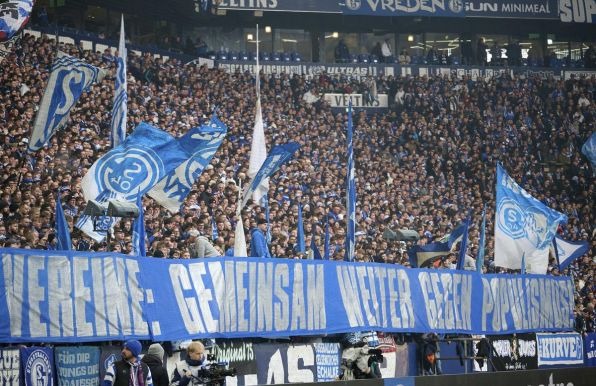
In third place is the first second division team, whose fans have had to endure a lot in recent years: FC Schalke 04. An average of 61,065 fans make the pilgrimage to the Veltins Arena every two weeks – although it is usually the guest area that has the last few seats left. The Veltins Arena has a capacity of 62,271 spectators. And in terms of results, things are looking up again at Schalke: coach Miron Muslic has the team playing intense, exciting soccer—and the fans are loving it.
The latest proof: during the 1-2 defeat at Eintracht Braunschweig at the end of the first half of the season, the Schalke ultras displayed a banner thanking the team for their performance: “Finally the pride of the city again – thank you!”
VfB Stuttgart follows in fourth place with an average of 59,500 fans per home game. Eintracht Frankfurt is close behind with an average of 59,042 spectators. Hamburger SV occupies sixth place with an average of 56,887 fans.
Borussia Mönchengladbach secured seventh place with an average attendance of 51,258, followed by 1. FC Köln (average of 50,000 fans per home game).
Ninth and tenth place go to two second division clubs. Hertha BSC welcomes an average of 48,451 fans to its home games. 1. FC Kaiserslautern follows in tenth place with 47,205 spectators.