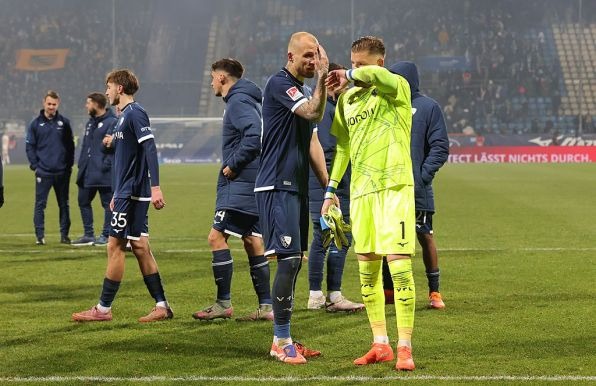
After a strong run, VfL Bochum suffered a surprising loss to second-to-last Dynamo Dresden. The first half was decisive.
Philipp Hofmann had a front-row seat: As VfL Bochum fell behind 0–2 against Dynamo Dresden in the first 45 minutes, he was sitting on the bench.
“The first half was probably the worst under Uwe Rösler,” the striker said bluntly, attempting to explain: “We didn’t really know whether to press or stay compact. From the outside, we didn’t have a clear game plan; instead, we were a bit passive.”
This inexplicable first half ultimately proved decisive in the team’s first competitive defeat (1–2) under the new coach. Yet the plan had actually been clear.
“The plan was to press forward when the goalkeeper had the ball, just like in the last few games,” said Hofmann. In practice, however, things looked different. “We were always a step too late, became too passive. The second goal was also too easy; Vincent Vermeij was alone against four players. That shouldn’t happen.”
Assist provider Alexander Rossipal also had—just like on his 1-0 goal—far too much space. The VfL seemed too slow and too sluggish physically and mentally in every area.
At least there was a significant improvement in performance after halftime. “We played very well then and really turned up the pressure. We had huge chances, and if the penalty had gone in, I think we would have won 4-2 because things would have really heated up,” said the striker.
Overall, however, the final precision was lacking, and in the case of Francis Onyeka’s missed penalty, so was the composure. “Unfortunately, we didn’t have the luck we’ve had in recent weeks. We lost the game in the first half; you can’t blame the guys for the second,” Hoffmann clarified.
For the first time since October 4, he had to accept another defeat with VfL Bochum. Cause for concern? Not for him: “That’s part of the process. It was also clear that we wouldn’t win every game. What’s always important is the reaction, and that was positive, which makes me optimistic for the coming weeks.”