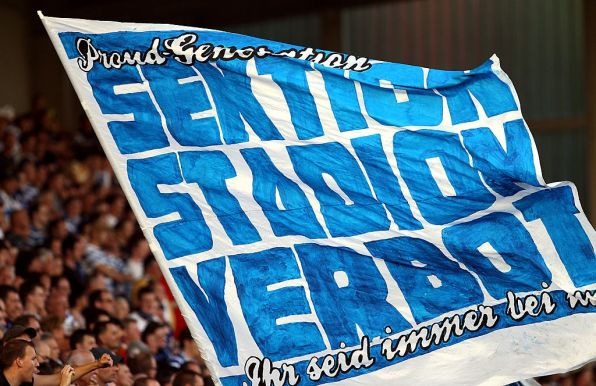
The debate over safety in soccer stadiums continues. The DFB has announced an interim update.
Stadium bans will continue to be imposed by local commissions. In addition, the German Soccer Association (DFB) has announced the creation of an additional central oversight body. “The new body will serve as an overarching supervisory authority to ensure a uniform, consistent, effective, efficient, and fair stadium ban procedure,” the DFB stated. There have recently been repeated discussions and protests by soccer fans on this issue.
At a high-level meeting on the topic of “Violence in Soccer Stadiums” about a year ago, the state sports ministers decided to introduce a nationwide central stadium ban commission in German professional soccer. As a result, representatives from politics, law enforcement, the DFB, the German Soccer League (DFL), and the Coordination Office for Fan Projects have been discussing stadium security in a working group over the past few months and will continue to do so.
Call to Eliminate Ticket Allotments for Away Fans According to the DFB, the group called, for example, for the reduction or elimination of ticket allotments for away fans or the requirement to personalize tickets. In addition, the issue was raised that authorities are no longer approving the clubs’ security plans. Matches could then be unable to take place.
“From a soccer perspective, such unilateral interventions by the authorities should be avoided at all costs, because they do not target the perpetrators and are unsuitable for achieving the desired goals,” writes the DFB. The association describes the stadium experience in Germany as “safe,” citing statistics from the police’s Central Information Office for Sports Operations (ZIS) as well as surveys.
DFB: “Differing Viewpoints” in the Discussions
“The goal of the DFB and the DFL has been and remains, in all discussions, to agree on appropriate and effective measures in the interest of soccer—measures that can further improve security around soccer matches while simultaneously reducing police deployment hours,” the DFB states. “At the same time, however, it was important to counter inappropriate, unnecessary, and/or disproportionate demands with clarification and objective arguments. Different points of view became very clear during the discussions.”
Among other things, the DFB aims to improve prevention efforts. This includes increasing the number of fan liaisons and strengthening the roles of the clubs’ security officers and event managers.