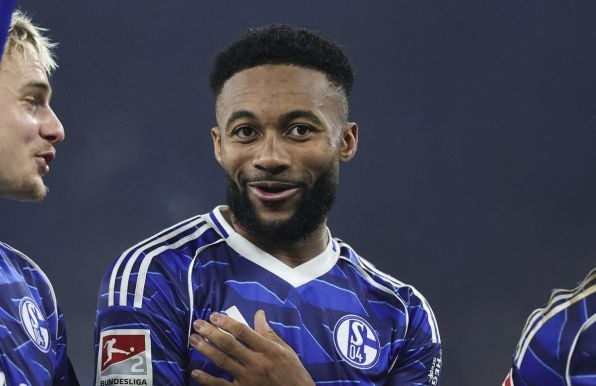
S04 striker Moussa Sylla watched a match by English Premier League club Wolverhampton Wanderers at the stadium on Monday evening. Sporting director Frank Baumann explains.
It’s nothing new that photos posted by professional soccer players on social media can spark major discussions. That was also the case at FC Schalke 04 this Tuesday.
Striker Moussa Sylla, who nearly left the club this summer, posted a photo from the stadium of the Wolverhampton Wanderers, who lost their Premier League match against Manchester United 1–4 on Monday night.
What was Sylla doing in Wolverhampton? Is a transfer in the works? Was this coordinated with the club?
The background: Schalke coach Miron Muslic gave his team three days off following Saturday’s Topgolf St. Nicholas celebration in Oberhausen. The pros won’t meet again until Wednesday morning (10:45 a.m.). The players are free to spend their time off however they like. When similarly long breaks are granted during international match windows, players have sometimes flown south to soak up some sun.
Wolverhampton is located 20 kilometers from the city of Birmingham in the midwest of England—it takes about an hour and a half to fly there from Düsseldorf. The “Wolves” are the clear favorites to be relegated from the Premier League; as the bottom-ranked team, they have earned only two points and are already 13 points behind the safety zone.
Schalke faces 1. FC Nürnberg on Sunday
Is Sylla a panic signing? Nothing suggests that. Sources within Schalke said Sylla was out and about on his day off. And sporting director Frank Baumann took it in stride as well. On the sidelines of the special jersey presentation, Baumann said: “It’s perfectly normal for soccer players to watch other clubs’ games from time to time. That’s why I’m extremely relaxed about it, and it was fine.”
On Sunday, Sylla will play what is likely to be his last game for Schalke against 1. FC Nürnberg (1:30 p.m./Sky)—after which he’ll travel with Mali to the Africa Cup of Nations. Sylla will miss the match in Braunschweig (December 21), and if Mali reaches the final, he’ll also miss the second-half opener in Berlin (January 17, 2026). Currently, there are no signs of a transfer for Sylla. “We’re assuming he’ll play many more games for us after the winter break,” said Baumann.
Koschinat Extends Contract – Announcement at the Members’ Meeting
Uwe Koschinat will remain head coach of Rot-Weiss Essen beyond the summer of 2026. Assistant coach Dominik Ernst is also extending his contract at Hafenstraße.
Very few of those involved would have expected this. At 7:08 p.m., a murmur rippled through the hall at the Rot-Weiss Essen members’ meeting. That’s because Marc-Nicolai Pfeifer, CEO of RWE, announced that head coach Uwe Koschinat had extended his contract, which was set to expire in the summer of 2026.
“In the second half of the season, Uwe Koschinat led us out of a challenging situation with great clarity and tremendous determination, securing our place in the league well ahead of schedule. On top of that, we won the Lower Rhine Cup and qualified for the DFB Cup—achievements that clearly demonstrate how consistently Uwe and his coaching staff work,” says Pfeifer.
He adds: “We are satisfied with the team’s on-field development over the past twelve months and, at the same time, see further potential—and we want to continue developing this path in a focused manner together with Uwe and his coaching staff. Continuity on the field is a key building block for sustainable success. That is why we are pleased that we were able to extend our partnership and look forward to the rest of the season with full conviction and confidence.”
Koschinat, who has been with Rot-Weiss Essen since December 12, 2024, explains: “Last winter, when I took over the team while it was in a relegation spot, I quickly realized just how important RWE is here in Essen and the region. The past twelve months have been intense and very demanding for everyone involved—and they’ve left a huge, positive impression on me. I was able to quickly form a cohesive unit with the coaching staff, and a great sense of community also developed with the fans during the second half of the season. We managed to avoid relegation and won the Lower Rhine Cup.”
The Koblenz native had taken over RWE when the team was in 18th place in the standings, three points behind the safety zone in the 3rd League. He led Rot-Weiss through a strong second half of the season to avoid relegation and finish in 8th place in the final standings of the 2024–25 season. He also won the Lower Rhine Cup in May 2025 (a 2–1 victory in the final against MSV Duisburg), thereby securing qualification for the first round of the 2025–26 DFB Cup.
“I’m proud to have signed a contract with Rot-Weiss Essen for the second time. I’m approaching this season’s major challenges and ambitious goals with at least the same level of determination as I did last season’s relegation battle. I’m very happy to continue being part of RWE’s sporting development and to remain at Hafenstraße,” says Koschinat.
The contract extension with assistant coach Dominik Ernst has also been finalized: The 35-year-old, who has been part of the RWE coaching staff since the start of the season, will also remain at Hafenstraße beyond the summer of 2026.
Ahead of the Bochum Match – Sporting Director Highly Sought After, First Half of the Season Over for Offensive Duo
According to media reports, the departure of sporting director Marcus Mann is looming at Hannover 96. In addition, the Lower Saxony club will have to do without two forwards in Saturday’s match against VfL Bochum.
At second-division club Hannover 96, VfL Bochum’s next opponent, the departure of sporting director Marcus Mann appears to be on the horizon. As reported by the “Bild” newspaper, the Austrian club RB Salzburg is making an intensive effort to sign the Lower Saxony club’s sporting director.
Talks are already underway, as 96 boss Martin Kind confirmed to “Bild.” “RB Salzburg has made an official and concrete approach. They want Marcus Mann. (…) Marcus Mann is interested, and we don’t want to hinder his career and development. But if that starts two years from now, that would of course be okay with us, too. We’ll always handle everything with goodwill, but we won’t let ourselves be pressured on a timeline. Without an alternative, there’s no solution,” said the 81-year-old.
Talks with the 41-year-old are reportedly already well advanced and could be concluded quickly. Most recently, the “Kurier” reported that Kind is negotiating a transfer fee for Mann with Red Bull boss Oliver Mintzlaff and RB soccer chief Jürgen Klopp. The contract of the 96 sports director, which contains no buyout clause, remains valid through 2029.
Mann has been with Hannover since the summer of 2021. Initially hired as sporting director, he was promoted to managing director of sports in March of this year. VfL Wolfsburg was also recently rumored to be interested in Mann, but the struggling Bundesliga club was turned down.
First-Half Season Over for Two Offensive Players
In both this coming Saturday’s league match (December 13, 8:30 p.m.) against VfL Bochum and the final game before the winter break at 1. FC Nürnberg (December 21, 1:30 p.m.), the fifth-place team will be without Mustapha Bundu and Husseyn Chakroun due to injury.
Right winger Bundu, who had earned a spot in coach Christian Titz’s starting lineup in recent weeks, suffered a medial ligament injury last weekend during the 2-2 draw in Münster and will therefore miss the final two matches of the first half of the season.
Husseyn Chakroun will also not take the field again this year. The 21-year-old forward had to be substituted in Münster after just 25 minutes because he felt muscle problems in his thigh following a tackle. Further examinations confirmed the suspected structural muscle-tendon injury in his left thigh. This will result in a layoff lasting “several weeks,” 96 announced.
Declaration of self-hosted wallets, social media monitoring. … tax authorities are getting organized
Tax monitoring related to cryptocurrencies reportedly has some gaps in France, according to a recent report by the Court of Auditors. On the agenda: reporting of self-hosted wallets and targeted monitoring on social media. An obvious security risk given the rise in kidnappings of crypto figures.
The Court of Auditors Highlights Tax Challenges Related to Cryptocurrencies
The Court of Auditors is the primary French institution responsible for overseeing public funds. In this context, it has just published a report dated December on the corrections needed to address “distortions in wealth taxation.”
This document, spanning over 200 pages, includes a chapter addressing the sensitive topic of cryptocurrencies—specifically, “the challenge of detecting undeclared digital assets.” This applies particularly to gains realized “in the form of capital gains, compensation, and donations.”
These capital gains largely concern people in their thirties, with more than 4,000 tax households referenced in this report. The problem? A discrepancy described as “significant” between Chainalysis’ estimates of capital gains by French cryptocurrency holders in 2021—estimated at 3.5 billion euros—and figures from the DGFiP, which report a total of 400 million euros in reported gains involving 20,000 taxpayers over the same period.
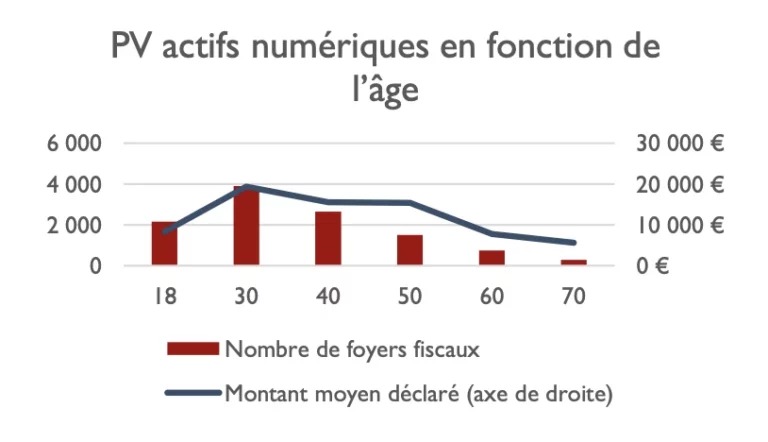
As a result of this finding, the reporting obligations of cryptocurrency holders and crypto service providers (PSANs) have been gradually strengthened. However, there are still some gaps to be filled, according to certain points in this report highlighted by Henri Gauthier on the X network.
Some ideas for improving oversight of cryptocurrency holders
The first point highlighted in this report concerns the entry into force of the “DAC 8” directive, scheduled for 2026. This directive requires European crypto service providers (PSANs) to report certain information regarding transactions conducted through them to the tax authorities of the member state in which they are based.
However, the Court of Auditors notes that this requirement “will not apply to PSANs hosted in France.” It therefore believes it would be necessary to remedy this situation by aligning the obligations of French PSANs in this area with those of their European counterparts.
The report also highlights what it calls regulatory “blind spots,” particularly due to a complete lack of response to requests from the tax authorities by certain non-European PSANs based in Singapore or Hong Kong.
At the same time, the Court of Auditors makes it very clear that French tax authorities lack the resources to conduct these audits, which are currently in the hands of “a handful of experts.” And for good reason: “digital assets do not yet constitute a specific focus of tax audits.”
On the agenda: reporting of self-hosted wallets and monitoring on social media
The main recommendation in this report calls for the implementation of a “requirement to notify the tax authorities of the holding of self-hosted crypto-asset wallets above a defined value threshold.”
A procedure that, according to Henri Gauthier, could involve listing the relevant addresses on the Cerfa tax return.
Finally, the Court of Auditors notes that the Tax Investigation Directorate is reportedly conducting “a pilot program allowing it to use non-public data from social media to detect undeclared digital asset transactions.”
This increased surveillance raises numerous issues, particularly regarding security for cryptocurrency holders, who are currently facing a surge in ransomware attacks. Indeed, their personal data could fall into the wrong hands—either through a hack or due to the complicity of certain government officials, as has recently been the case.
Why Are These Two Cryptos in Free Fall? Analysis
October 10 will go down as one of the most turbulent days in crypto history. A tsunami of liquidations swept through the market, leaving some projects in dire straits. Aptos and Bittensor were among the hardest hit. Why did they plummet so sharply? Is their future in jeopardy?
Extreme Conditions for the Crypto Market
The crypto market is characterized by volatility far greater than that of traditional assets (stocks, real estate, etc.). Investors know this. Yet even the most cautious investors suffered considerable losses on October 10.
This was the largest liquidation event ever observed in the crypto world. Neither the collapse of FTX nor that of Terra Luna had triggered such a tidal . This phenomenon is telling. The majority of projects were hit hard by this extreme volatility. Some will manage to bounce back, slowly rebuilding their credibility and investor confidence. For others, it is already too late: the crash was so brutal that a recovery seems impossible.
In this article, we will analyze two cryptos that were severely in November. We’ll highlight the key factors that contributed to the decline of the APT token and the TAO token:

Aptos: – 36.6%
Aptos is a Layer 1 blockchain born from the ashes of Diem, a crypto project abandoned by Facebook (Meta) due to regulatory pressure. Based on the Move language, Aptos is an ultra-fast blockchain. It offers significantly lower transaction fees than the Ethereum blockchain, making it well-suited for the high-frequency trading sector.
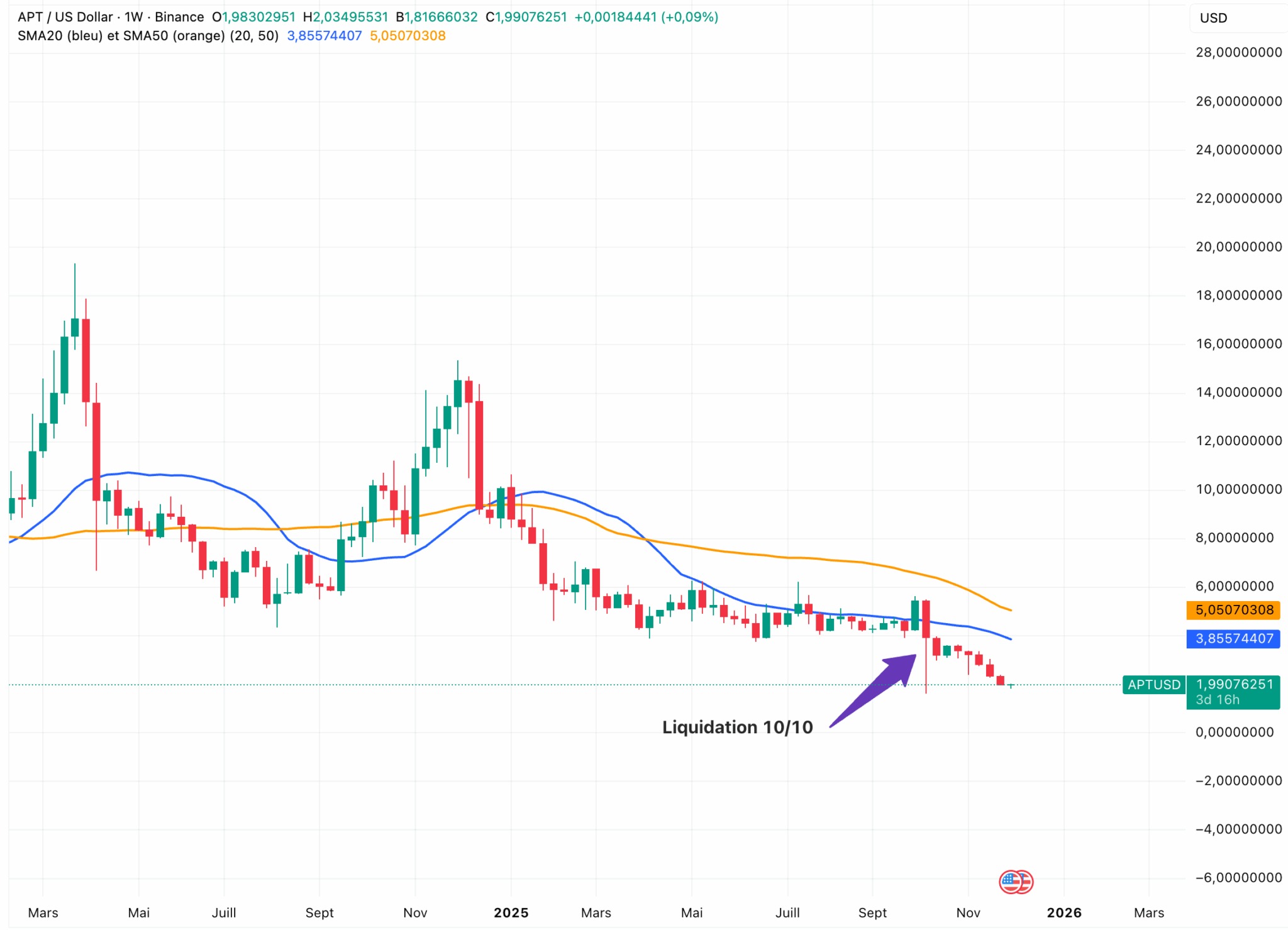
As shown in the chart above, the price of the APT token has never recovered from the crash on October 10. Over the last 30 days, its value has fallen by nearly 37%. Since the week of October 10, the decline has even reached 63%, or nearly two-thirds of its market capitalization.
While we’re discussing a technical aspect here, other fundamental and on-chain factors also help explain this plunge.
Aptos is often referred to as a “VC Chain” due to its massive venture capital funding. According to DropsTab, the project has raised over $350 million across two funding rounds. Of the five rounds in total, three remain opaque in terms of their terms.
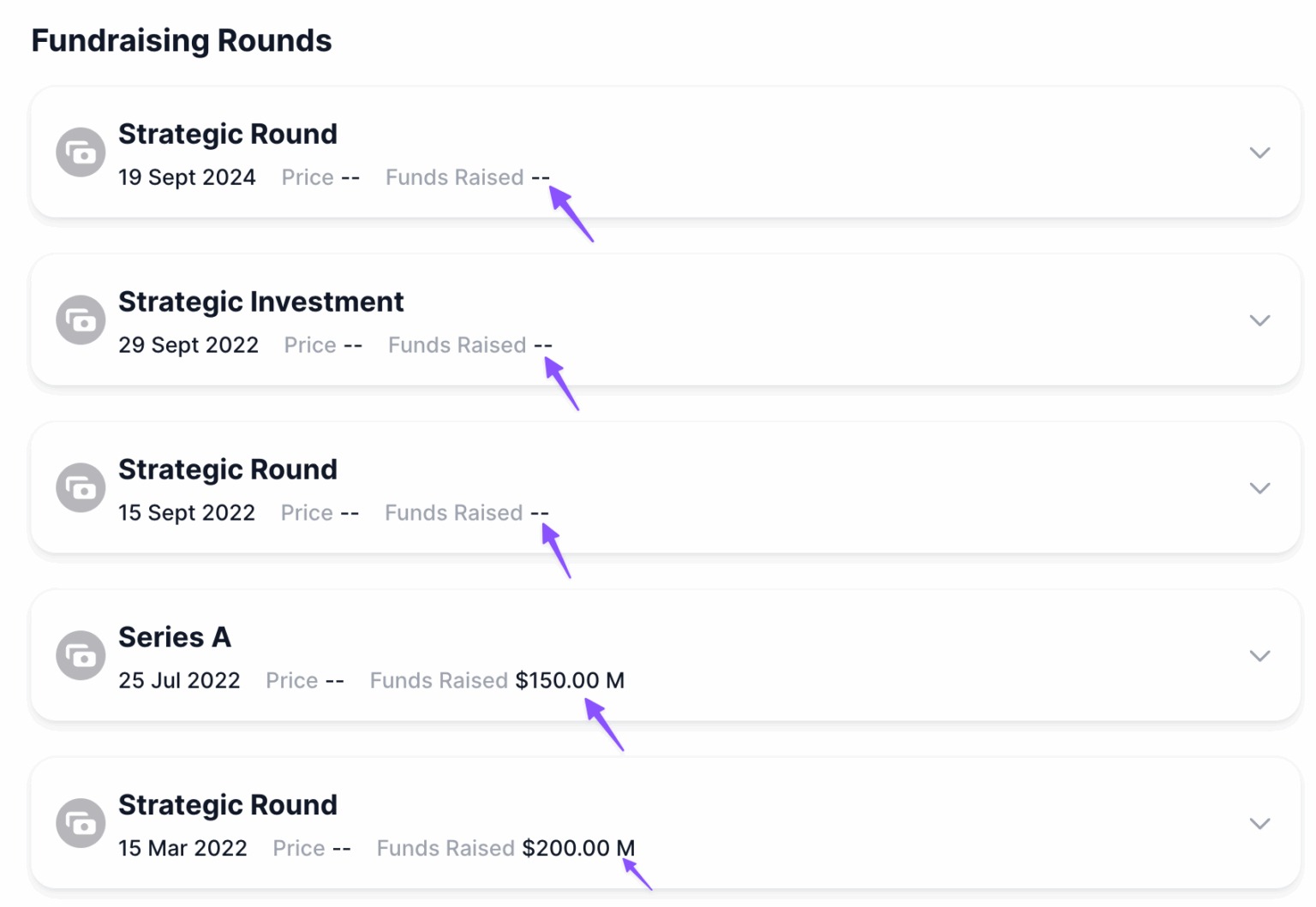
These fundraising rounds come with a trade-off: institutional investors gradually recoup their investment by selling their tokens, with the aim of making a profit (or limiting their losses).
This process, known as token unlocks, acts as a drag on the token’s price. If demand does not offset the increase in supply caused by the unlocks, the price automatically falls.
Each month, 11.31 million APT tokens are released, further exacerbating this imbalance between supply and demand.
Furthermore, on-chain data from the Aptos blockchain does not bode well:
- From October to November, fees generated by the blockchain fell by 32.4%;
- Over the same period, the trading volume of the APT token fell by more than 33.5%.
In summary, Aptos is navigating a period of significant turbulence. The token has broken through its technical support levels, and neither its tokenomics nor on-chain activity appear capable of reversing the trend.
Bittensor (TAO): -40.2%
Launched in November 2021, Bittensor presents itself as a project combining artificial intelligence (AI) and blockchain. Every Bittensor participant (individuals, software, or hardware) freely contributes to the system by providing AI models, data, or computing power.
Paradoxically, the price of the TAO token had held up well against the October 10 shock, even beginning a recovery the very next day. However, in November, its value plummeted by more than 40%. Currently, it is testing a major technical support level on the weekly chart —the last line of defense before a potential drop toward $215.
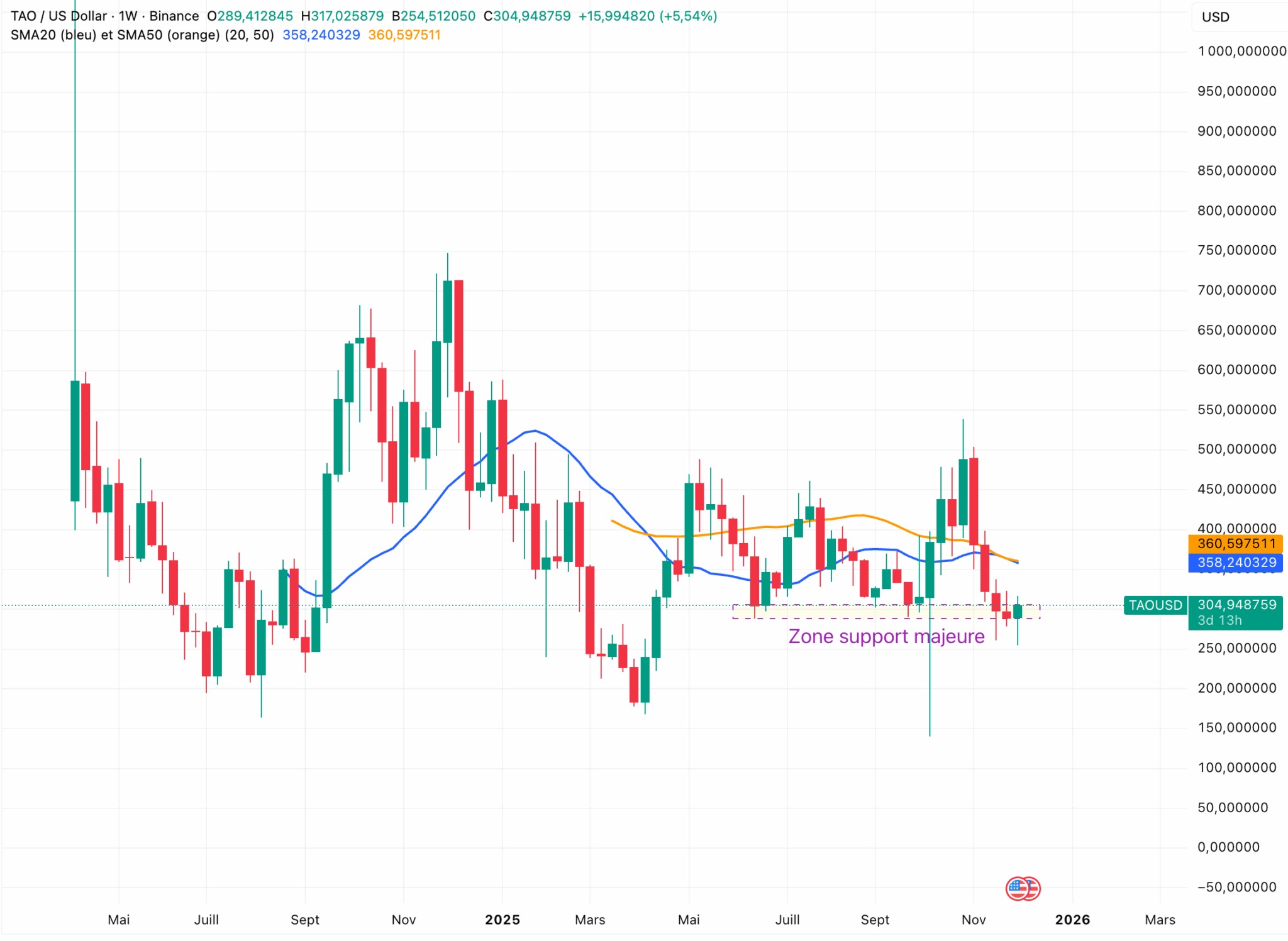
It’s important to provide some context for this decline: the entire crypto market posted lackluster performance in November, with BTC down 13% and ETH down 17%. These are particularly challenging conditions, with very few altcoins posting positive returns.
However, this is not the only possible explanation for TAO’s decline. In fact, Bittensor is reaching a pivotal moment in its history. On December 12, Bittensor will undergo its first halving.
In other words, the number of TAO issued each day will be cut in half, from 7,200 to 3,600. Although this type of event is generally considered beneficial in the long term for a cryptocurrency’s appreciation (less supply), it can also slow the growth of the Bittensor ecosystem.
In fact, network participants (miners, validators, etc.) will see their incentives (financial rewards) cut in half. Echoing this concern, data from the Token Terminal platform suggests that the number of core developers dropped dramatically over the summer, falling from 70 people to a reduced team of fewer than 20:

Another worrying sign: TAO’s trading volume has plummeted in recent weeks. It fell from $3.56 billion (week of October 13) to 1 01 billion at the end of November—a 72% drop. This decline reflects a clear pullback by traders.
In summary, Bittensor is at a pivotal moment in its history. Between maintaining its technical support and adjusting its post-halving business model, the coming weeks will be crucial for the project’s future.
Is a memory chip shortage for computing imminent? A veritable heist in AI data centers
The accelerated development of data centers designed to run AI is driving unprecedented competition in the market for computer memory chips. And needless to say, the decision by industry giant Micron to exit the public market won’t help matters.
Computer memory crisis: a “full-scale heist currently underway”
The rapid development of artificial intelligence (AI) is reshaping numerous sectors, far beyond the simple fact that it is gradually and successfully performing increasingly complex tasks that until now involved intellectual and creative professions reserved for humans.
In fact, another battle is being waged from a more technical perspective—in the market for computer memory chips, particularly the well-known DRAMs. At the heart of the issue: data centers in constant need of RAM and computing power, to the obvious detriment of the consumer IT market.
This observation has been made by numerous IT specialists, to the point where the X account going by the pseudonym Deus Ex Silicium speaks of a “full-blown heist currently underway” in the sector, with prices for DDR4, DDR5, and NAND Flash RAM having risen sharply since September, and “peaks of over 500% expected by next summer.”
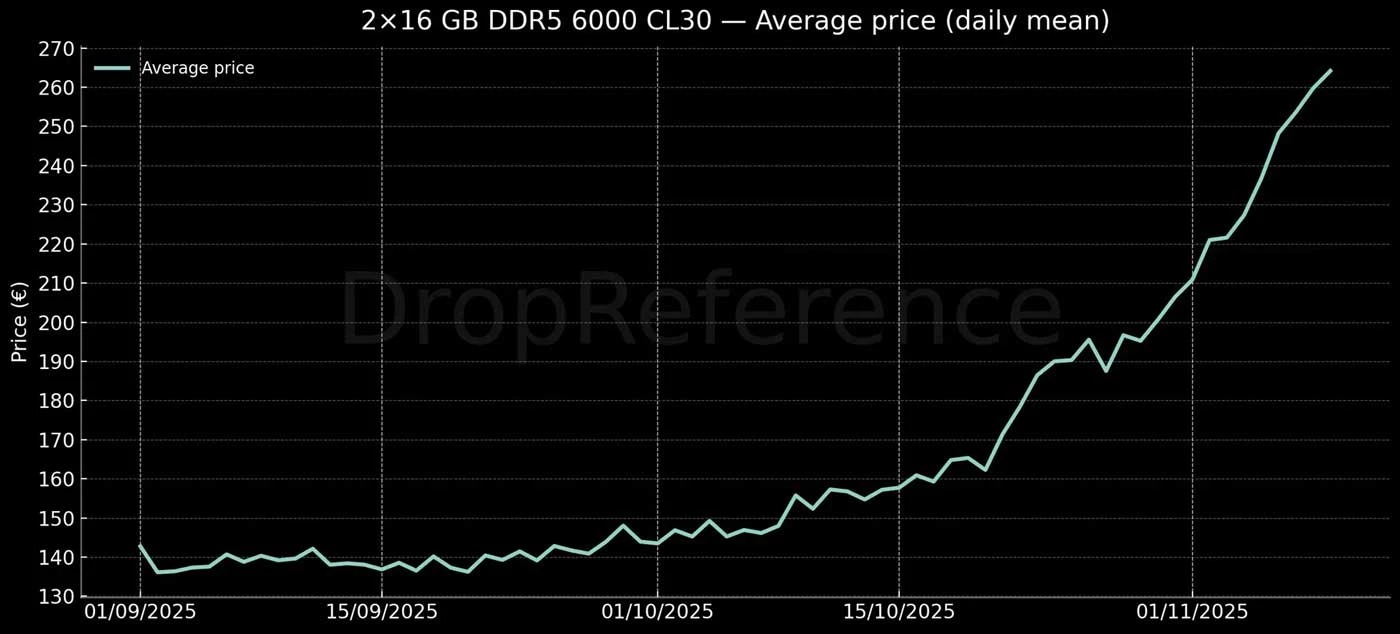
A memory shortage in which the giant Nvidia—which does not directly produce this type of chip—appears to be an aggravating factor, given its dominant position in the AI accelerator market. But it appears to have ultimately been caught up in this crisis. Indeed, some sources indicate that it is now shipping its GPUs without the video memory chips (VRAM) that were previously included, leaving its partners to deal with the complexity of sourcing them.
Tech giant Micron exits the consumer market to specialize in AI
A complicated situation that could well become even more so, if the recent announcement by industry giant Micron regarding the planned halt to June 2026 of the sale of its consumer memory chips, sold under the Crucial brand.
The goal of this decision? To allow Micron to exit the consumer market, where it has offered its products for 30 years, in order to focus exclusively on its most profitable business: selling memory directly to AI data centers operated by companies such as OpenAI, Google, and others.
This shift toward AI also affects Bitcoin blockchain miners, particularly to increase the profitability of their power supply as BTC mining becomes less and less profitable.
From a more technical perspective, the current memory chip crisis does not directly affect the production of the ASICs needed for their operations, but rather reflects a broader reorganization of the global semiconductor supply chain. Regardless of be the case, an inevitable increase in operating costs seems likely.
ers comp
Top Crypto Performers for November
With November marked by a drop of more than 13% in the price of Bitcoin, few cryptocurrencies are performing well. However, a few die-hard altcoins are holding their own: find out which ones and the reasons behind their outperformance, bucking the overall market trend
A Difficult November for the Crypto Market
While Bitcoin’s price posted a negative return of -13% over the past 30 days, Ether, for its part, experienced a steeper decline of approximately -17%.
Few altcoins managed to perform well under such conditions. And yet, some cryptocurrencies are managing to post respectable returns.
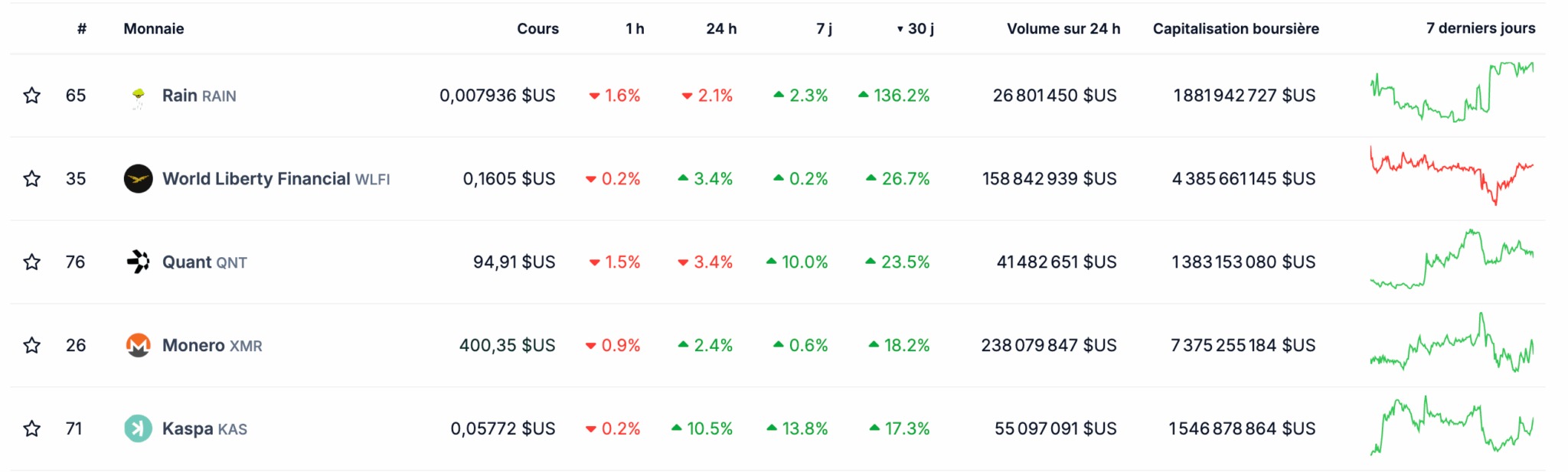
Among the top 5 best-performing cryptos in November, we can mention KAS, XMR, QNT, WLFI, and RAIN:
5 – Kaspa (KAS): +17.3%
Launched in November 2021, the Kaspa project draws heavily on Bitcoin, whether in terms of principles, methodology, or the proof-of-work (PoW) environment.
In fact, Kaspa is based on the GhostDAG protocol, which extends the Nakamoto consensus to a Directed Acyclic Graph (DAG) system, with the goal of making it more scalable than its first implementation, Bitcoin.
Over the past 30 days, the price of the KAS cryptocurrency has risen by more than 17%. Among the potential reasons for this performance is the launch of Kaspa’s first decentralized bridge, which greatly improves its interoperability with EVM blockchains.
Following this major milestone, Dymension has integrated KAS as a base asset. In other words, Dymension’s rollapps can now choose to use KAS to pay gas fees.
In summary, Kaspa has made a significant technological advancement, combined with new demand for KAS.
4 – Monero (XMR): +18.2%
Monero is a blockchain focused on anonymity, where transactions are made untraceable through the use of multiple cryptographic techniques. Monero’s native cryptocurrency shares the same name as the blockchain and is known by the ticker XMR.
Over the past 30 days, the price of XMR has surged by more than 18%.
Although the reasons behind this price surge remain unclear, it is likely that Monero benefited from a rotation of capital. Indeed, the privacy coin narrative was in full swing during the month of October, particularly with Zcash, which posted exceptional performance over that period.
Thus, it is possible that capital that had shifted away from Zcash have flowed back into Monero. Indeed, XMR remains the highest-market-cap cryptocurrency in the privacy coin sector to this day. It therefore remains a “safe bet” in the minds of investors, regardless of whether there is hype surrounding a particular narrative or not.
3 – Quant (QNT): +23.5%
Quant is a project focused on a very specific segment: institutional interoperability. Unlike most blockchains, which seek to attract users or developers, Quant directly targets banks, companies, and financial infrastructures that want to connect their existing systems to different blockchains without having to rebuild their entire architecture.
< br />Its flagship product, Overledger, is not a blockchain but a multi-chain operating system that allows interaction with multiple public and private blockchains as if they were part of a single environment.
Over the past 30 days, the price of the QNT cryptocurrency has risen by 23.5%.
Among the potential reasons for QNT’s performance, we can notably cite Quant’s collaboration with various institutions, such as the European Central Bank (ECB) on the digital euro (CBDC) project. More recently, Quant announced its participation in a British tokenized deposits project launched by a banking consortium in the United Kingdom.
However, a word of caution: beyond the hype, it is difficult to analyze the actual growth or demand for this type of project.
2 – World Liberty Financial (WLFI): +26.7%
World Liberty Financial is a decentralized finance (DeFi) protocol launched in 2024, closely linked to U.S. President Donald Trump and his family. Presented as an attempt to “improve the dollar,” the project consists of two pillars: a stablecoin, the USD1, pegged to the U.S. dollar, and a governance token, WLFI.
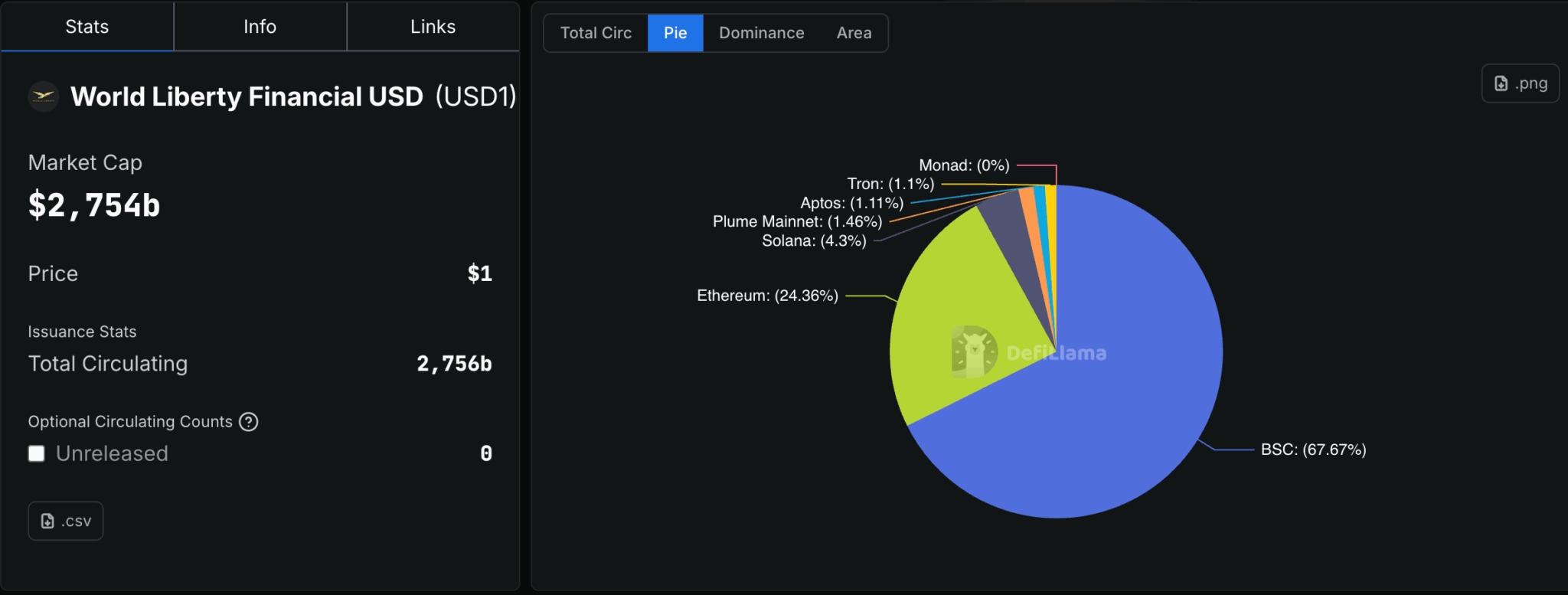
According to data from the DeFiLlama analytics platform, the USD1 stablecoin is now the 7th most capitalized stablecoin at $2.75 billion.
Beyond this fundamental data, the project recently announced a buyback & burn program for its WLFI token. This type of mechanism is generally very popular with investors , who may view it as a form of value redistribution.
Over the past 30 days, the price of the WLFI cryptocurrency has risen by 26.7%.
1 – Rain: +136.2%
Rain Protocol is a decentralized prediction market built on the Arbitrum blockchain and interoperable with the Base, BNB Chain, and Ethereum. It aims to be the “Uniswap of prediction markets”: anyone can create markets (public or private) on a wide range of events, without prior authorization.
The RAIN token is the protocol’s native cryptocurrency: it is used to participate in the ecosystem, pay for and participate in markets, and engage in governance. Currently in beta, Rain boasts a permissionless model that combines resolutions via oracles and artificial intelligence (AI) systems.
Over the past 30 days, the price of the RAIN token has skyrocketed, posting a +136% gain during this period.
Among the potential reasons for this surge is the fact that a Nasdaq-listed company chose to invest $212 million in the RAIN token. Indeed, prediction markets are on the rise, as as evidenced by recent funding rounds at the two industry leaders, Polymarket and Kalshi.
However, we recommend exercising caution regarding the RAIN token. Companies that adopt a crypto treasury system often have a failing business model, and these strategic pivots are frequently “ last-ditch effort” to stay afloat.
Furthermore, if the company decides to abandon its crypto treasury project, the RAIN token could be significantly impacted.
Honorable Mentions
Among the cryptocurrencies not included in the previous ranking—due to their market capitalization falling outside the Top 100—