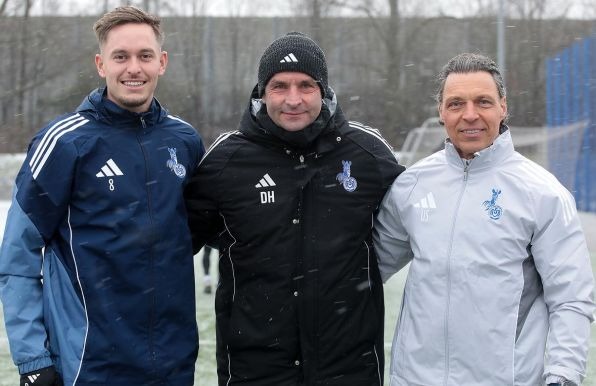
With the signings of Aljaz Casar and Lex-Tyger Lobinger, MSV Duisburg has made a bold statement. The competition in the 3. Liga promotion race should be on notice.
Although the Zebras had to dig deep into their pockets for these two high-profile winter signings, hopes for a return to the 2. Bundesliga have risen noticeably with the recent arrival of Aljaz Casar (from Dresden) and Lex-Tyger Lobinger (from Viktoria Köln) at the winter training camp in Belek. The Zebras have made a statement—and sent a clear message to the league’s top teams. One thing is clear: MSV means business.
You don’t sign players with second-division caliber just to settle for the 45-point mark in the end. Any team that makes targeted additions at this stage of the season is no longer thinking purely defensively. Despite some inconsistent results toward the end of the first half of the season, MSV has continued to compete at the very top for months thanks to its dream start to the season and a solid foundation. It’s an opportunity that the club at Wedau clearly intends to capitalize on.
Many fans had recently been calling for exactly that: new momentum for the offense. Even back in the Regionalliga, the team lacked a classic goal-scorer who could make the difference and single-handedly propel the club back to League 3. No one wanted—or could afford—to continue relying exclusively on the scoring ability of midfielders Conor Noß or Patrick Sussek.
Finally, a goal-scorer? – Which strikers are now feeling the heat?
Lobinger brings the type of striker that MSV’s play has been missing so far: someone who can hold up high and long balls, win 50-50 battles, exude a goal-scoring threat, and possesses a killer instinct in front of the net. Presence, size, power, mentality. A deliberately chosen profile for the long-missed center forward.
This will inevitably make things tougher for other attackers. Thilo Töpken, Tim Heike, and Florian Krüger have so far failed to deliver the goal-scoring output that was hoped for. Even the young Dutchman Andy Visser, who might benefit from a loan spell, is now under closer scrutiny. Size, playing system, coordination—it has been criticized too often that the strikers were not optimally integrated into Dietmar Hirsch’s system so far. But the fact remains: In the end, strikers are simply measured by their goals.
MSV is now going all out. Whether this marks the end of the transfer window or whether roster moves in either direction are still possible remains to be seen. The transfers made so far speak to the persuasive efforts of the sporting management team led by Chris Schmoldt. Managing Director Michael Preetz has made them possible through his financially sound work—something that wasn’t always as much a given at Wedau as it is now.
No, this doesn’t automatically make MSV a promotion favorite. And officially, no one will redefine the season’s goal. But anyone who’s still talking exclusively about avoiding relegation is misjudging the reality. The weak spots have been—just as they were last winter—specifically addressed. With the return of players recovering from long-term injuries, the offense—which has been faltering lately—could suddenly be revitalized with a lot of quality.
A run to the top isn’t out of the question. Even if it doesn’t happen right away, the foundation for the new season has already been laid. After all, euphoria and the pressure of high expectations are always part of the picture in Duisburg. What will be decisive is how MSV gets off to a start—and whether the new signings live up to the high expectations.
The first step has been taken. However, the 2023–24 relegation season showed that, despite early praise, things can quickly take a turn for the worse. Daniel Ginczek once arrived as a beacon of hope—and ultimately became a symbol of the team’s decline. That’s precisely why the motto now is: Courage, yes—complacency, no.